It was past one when I gave up pretending I might sleep. Saturday had emptied out the way Saturdays do once the city finally goes quiet, and there I was, wide awake and somehow exhausted at the same time, the kind of tiredness that has nothing to do with the body. I cracked open a Red Bull, which is its own small joke, a man fighting his own nervous system at one in the morning, and I gathered some snacks and sat down in front of the television the way you sit down in front of a fire you are not sure you want to be warmed by.
I don’t really know why I chose Train Dreams. There is a kind of instinct that takes over on nights like that, when the anxiety is humming under everything and the years are pressing down with their full mid-life weight, and instead of reaching for something bright and forgettable you reach for the thing that will press on the bruise. Not to escape what you are feeling. To give it a shape. To find someone, even a man invented on a screen, who seems to know the thing you cannot quite say out loud.
I was not ready for it. I want to put that down honestly before anything else. I sat down expecting a quiet film about trees and old America and I got up two hours later carrying something I am still carrying now.
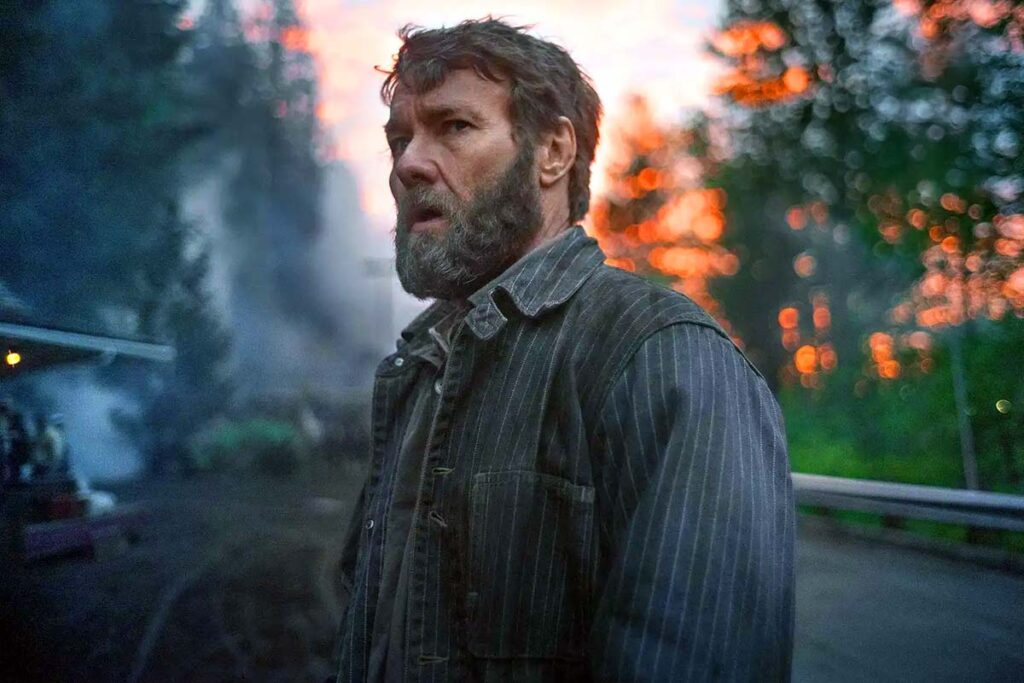
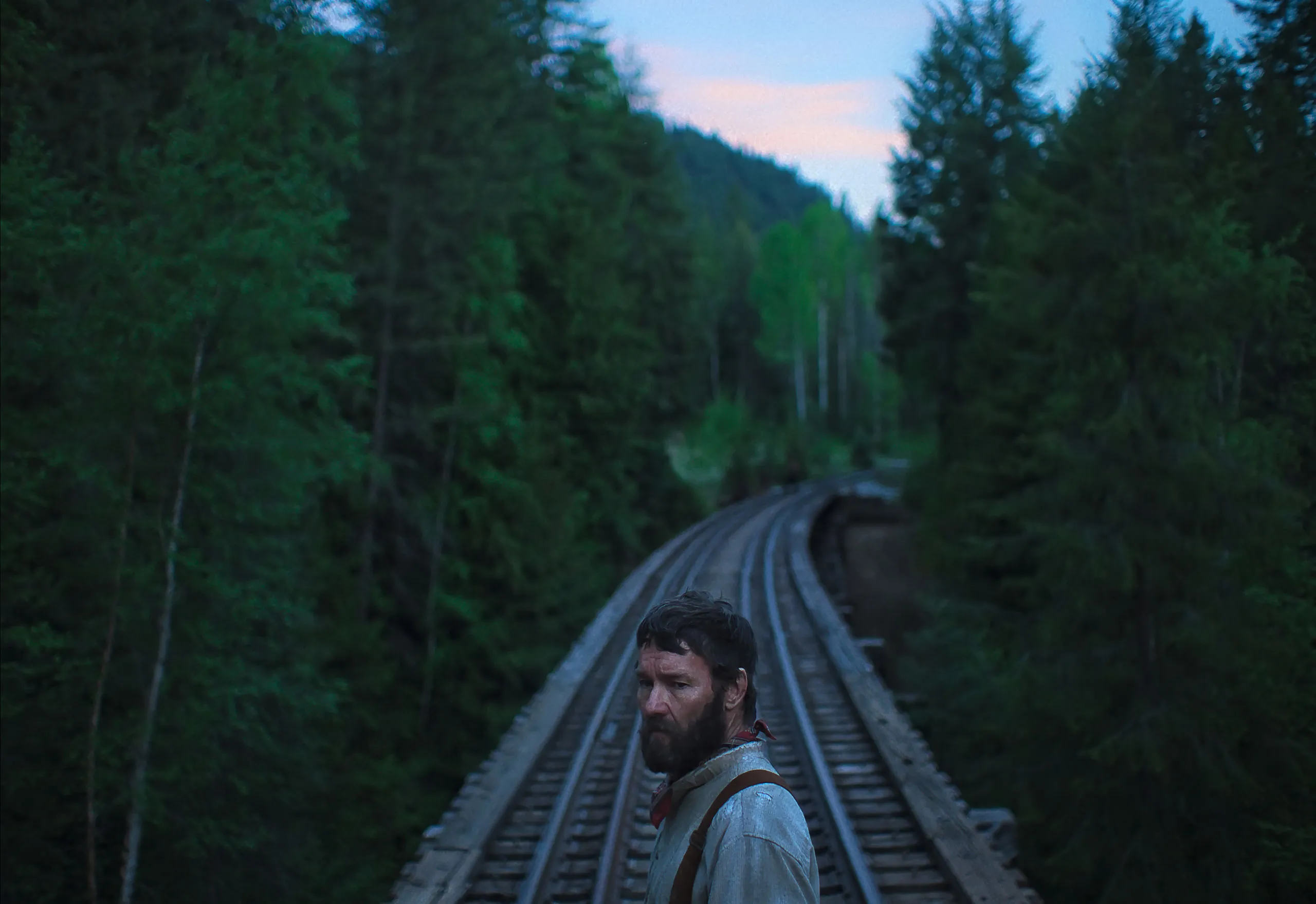
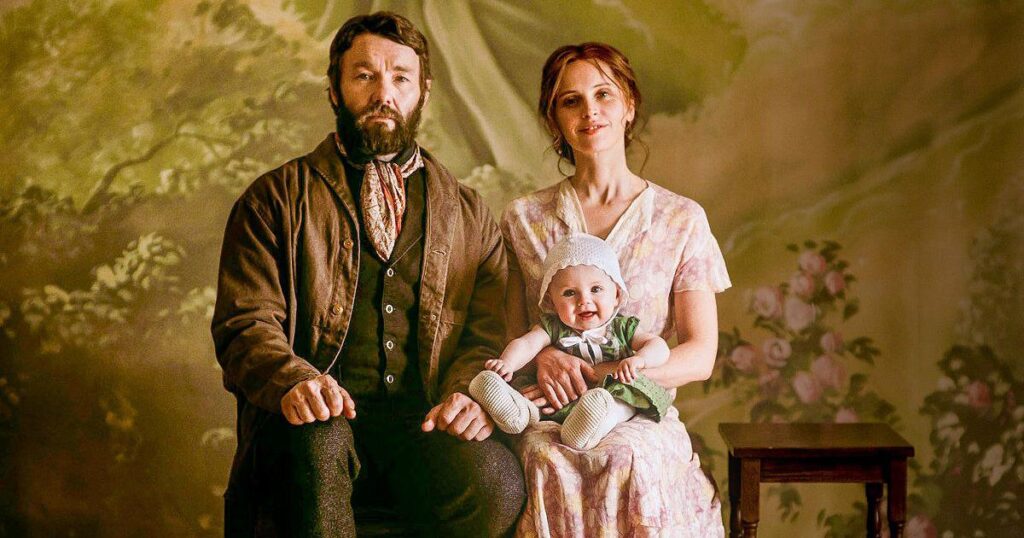
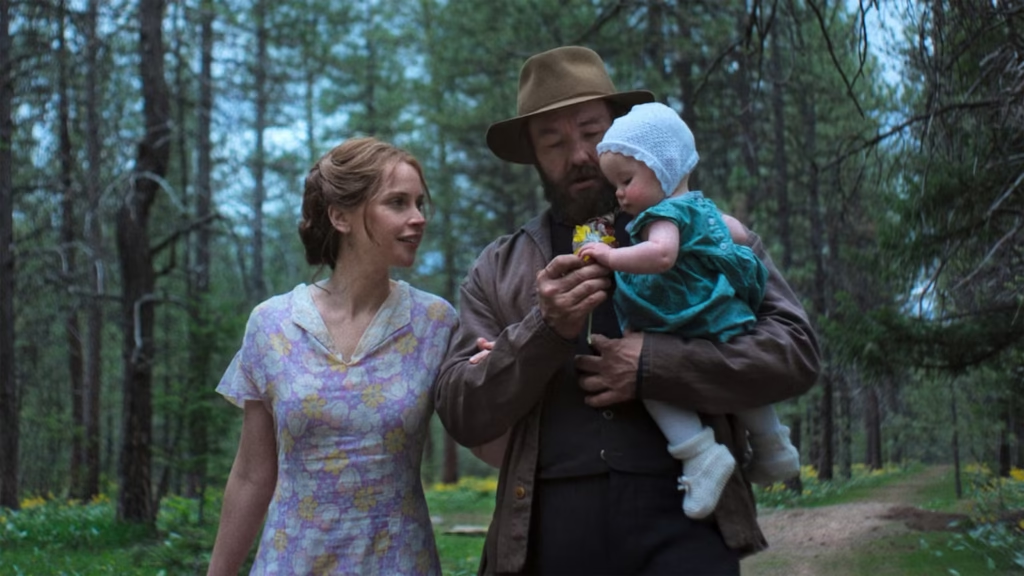
The film follows a man named Robert Grainier, a logger and a railroad worker in the early part of the last century, one of those men who built the country with their hands and were forgotten by it almost at once. He does not know the date of his own birth. He works far from home, cutting down enormous trees so that tracks can be laid across the land, making the world smaller and emptier with every swing of the axe. For a short while in the middle of his life he is given the only thing that ever softens him: a wife, a small daughter, a cabin he raised himself in a clearing in the woods. Candlelight, a fire, someone who loves him back and lets him believe it. The film holds this stretch in a golden, almost unbearable light, and if you have lived long enough you already know that light is a warning.
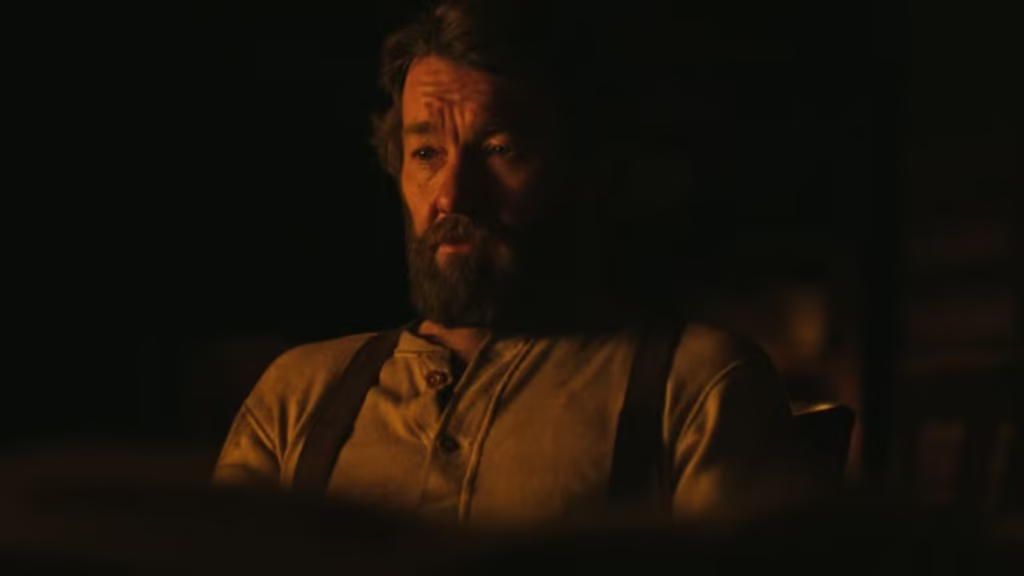
What happens to that life I will leave for you to find for yourself. What I will say is that the film does not raise its voice when it takes everything away from him. There is no swelling music telling you how to feel. The loss simply arrives, the way it arrives in actual life, on an ordinary day with no warning attached, and then the man goes on living for decades afterward in the same woods, more or less alone, saying almost nothing about the hole at the center of him. That silence is the part that broke me. Not the loss itself. The years and years of carrying it without speech.
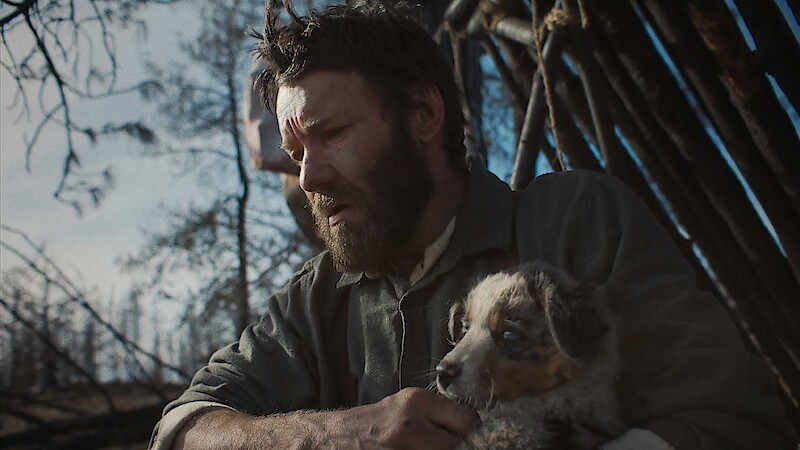
This is what the film gave me a vocabulary for, and what I keep turning over in the days since. There is a sadness that passes through you and there is a grief that has weight, and they are not the same animal. The first kind moves on. You feel it, it hurts, it fades, you are handed back to yourself more or less whole. The second kind does not move on. It settles into the structure of you and changes how you stand. It gets into your gait. It gets into the way you look at a sky, the way you hold a cup, the way you go quiet in the middle of a sentence for no reason anyone at the table can see. You do not get over it, because it is not a thing sitting on top of your life. It has become part of the load-bearing wall. Grainier carries his for the rest of his years and almost never names it, and the film trusts you to understand that the not-naming is the grief itself, fully grown.
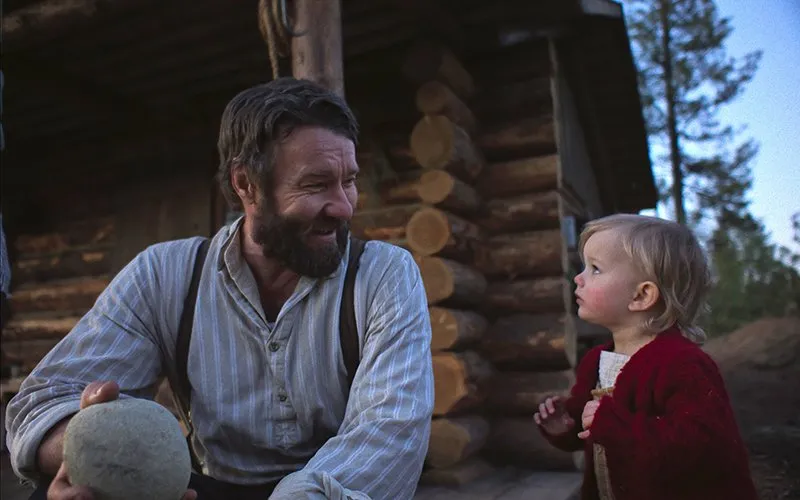
I sat there in my own room, in a city Robert Grainier could never have imagined, a hundred years and half a world away from his woods, and I felt the whole thing reach across all of that distance and find me. That is the strange power of it. The particulars of his life and mine could not be more different and the substance underneath is exactly the same. Time takes everything. You are given a few people and a little warmth and some good light, and then it goes, in an order you do not get to choose and at a speed you cannot slow, and you keep getting up in the morning because getting up is what there is to do. Mid-life, I am learning, is partly just the moment you stop believing you will be the exception to any of it. You start to feel the weight in your own body and not only as an idea.
The old traditions I keep returning to have circled this forever without ever quite taming it. The Sufis spoke of fana, the self dissolving until only the larger thing is left. The Vedanta says the whole appearance is passing and was never as solid as it looked to begin with. Kabir wrote about it with a weaver’s plainness, always aware that the thread runs out. The Buddhists look straight at impermanence and refuse to blink. And here was a film with no doctrine in it at all, no philosophy spoken aloud, walking up to the same truth with nothing but trees and silence and one ordinary man, which may in the end be the only honest way to walk up to it.
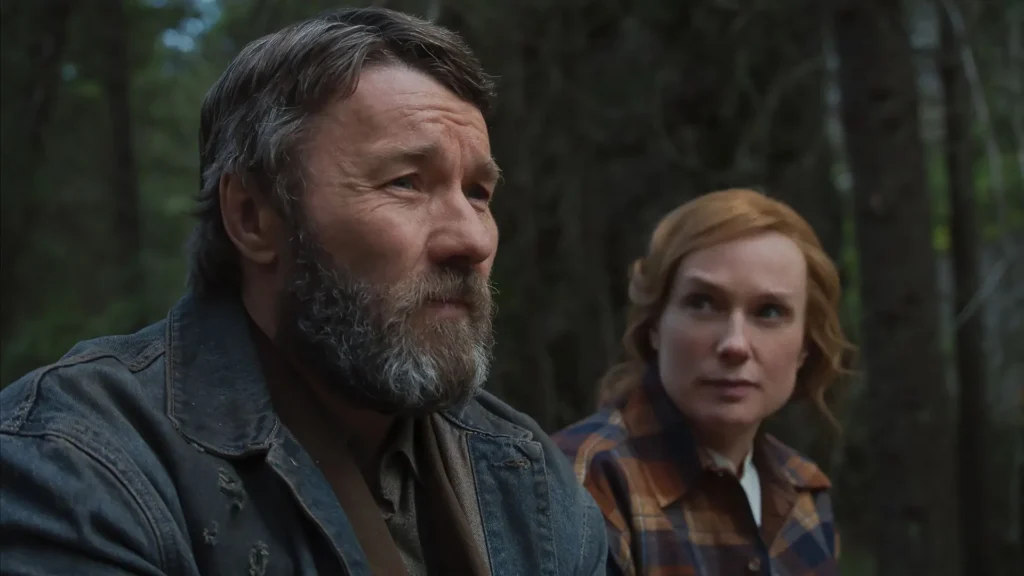
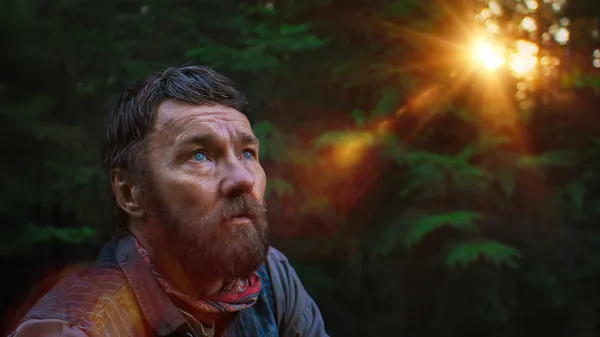
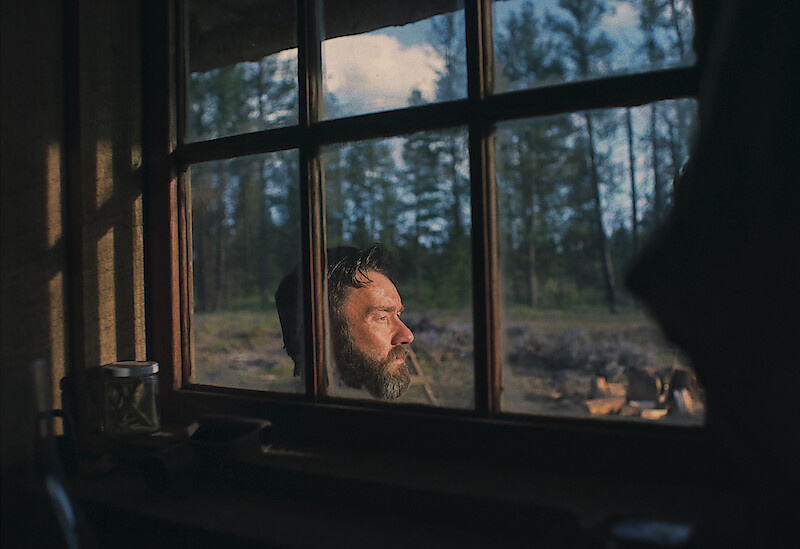
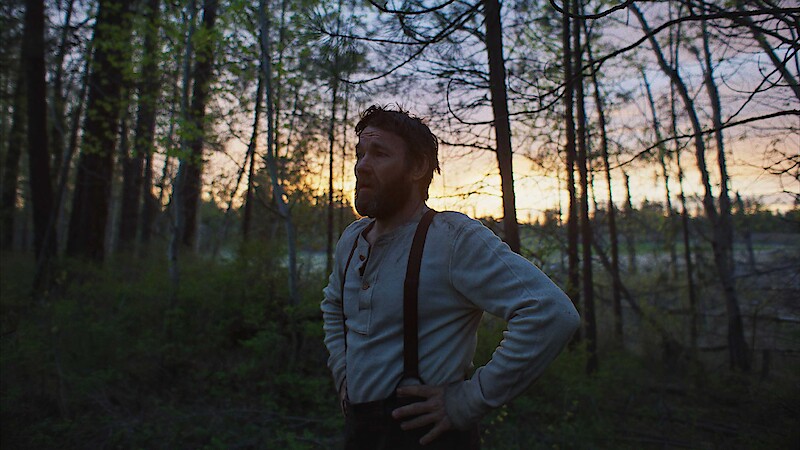
And it was beautiful. That is the part I cannot get past, the part that kept me from switching it off and going numb in front of something easier. Every frame looked like it had been waited for. The light coming down through the high trees, the smoke lifting off a fire, the enormous indifferent landscape that does not care about the man and somehow holds him anyway. I think this is close to the only thing art is actually for. To sit down beside you in the dark and not look away from the thing you are most afraid of. The film never once promises that it gets better. It tells you that it is heavy and that it is beautiful, and that both of these are true in the same instant, and that you are allowed to hold the two of them at once without forcing them into something neater.
There is a quiet suggestion running underneath the whole thing that what is gone is not less real than what remains. That the dead are still part of the standing world, the way a fallen tree is still part of the forest, feeding it, holding its place in the ground long after it has come down. I found that almost unbearably consoling at one in the morning, more than any reassurance could have been. Nobody was telling me it would all be fine. Somebody was telling me that the weight is real, and so is the beauty, and that you carry both, and that this is not a failure of living. It is simply what a life turns out to be.
The Red Bull was finished and gone flat by the time the screen went dark. One in the morning had become three, the snacks sitting untouched beside me. The film was over and was not over, the way the ones that matter refuse to end when the credits do. He was right, that version of me who scratched out a few lines at one in the morning. It lingered. It stayed on the being. It is still here now as I write this. The anxiety had not gone anywhere either, but it had changed its shape. It had been handed a name and a face and a man in the woods to belong to, and that turns out to be easier to lie down beside than the formless version of it. I went to bed carrying the weight, which I am slowly beginning to understand is a better way to go to bed than empty.
Somewhere in my head the trees are still standing. I expect they will be there for a while.